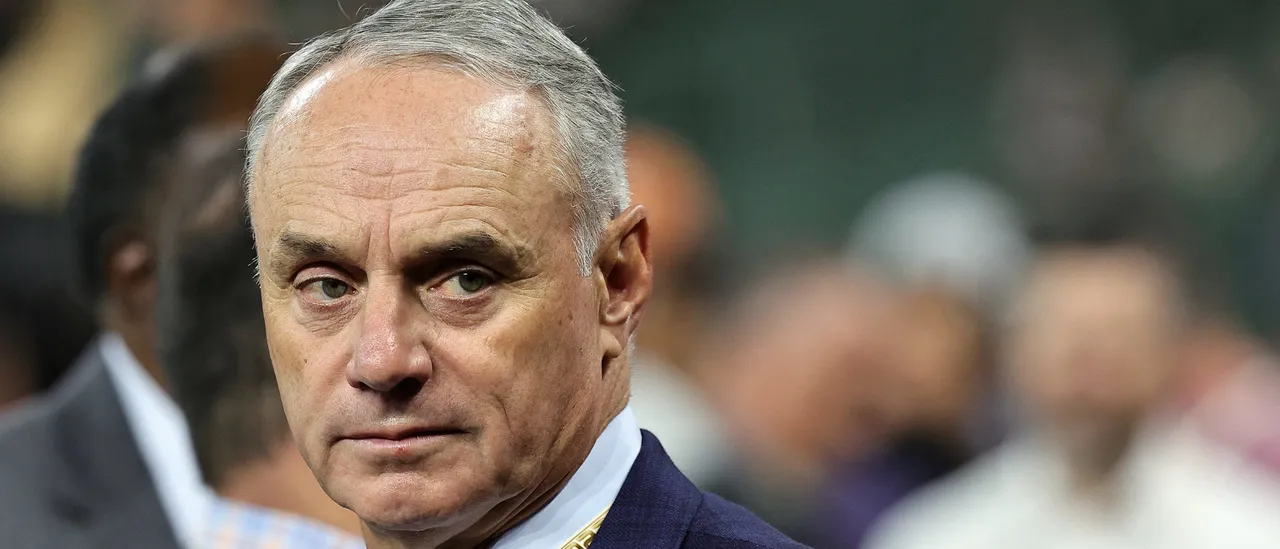
Rob Manfred, the commissioner of Major League Baseball, brought up the idea of potentially busting up the American and National Leagues. And that's not all.
Why it matters
- Rob Manfred's proposal for league realignment aims to rejuvenate fan engagement and interest in Major League Baseball.
- The potential separation of the American and National Leagues could lead to a more dynamic competitive landscape.
- Shifts in scheduling and rivalries may improve the overall viewing experience for fans across the nation.
In a recent discussion, Rob Manfred, the commissioner of Major League Baseball (MLB), introduced a provocative idea that has stirred significant interest among fans and analysts alike: the possibility of dismantling the traditional structure of the American and National Leagues. This suggestion, while still in its infancy, has raised eyebrows and sparked conversations about the future of the sport.
The baseball community has long been accustomed to the separation of the two leagues, which have their own distinct identities and histories. However, Manfred's contemplation of a realignment reflects a broader desire to innovate and adapt Major League Baseball to the changing preferences of its fan base. As viewership patterns evolve and younger audiences seek more dynamic and engaging sports experiences, the league's leadership is under pressure to respond in meaningful ways.
One of the core motivations behind this idea is to enhance fan engagement. Manfred noted that baseball has faced challenges in maintaining its relevance in a fast-paced entertainment landscape dominated by other sports and streaming options. By considering a structural change, the MLB could potentially foster new rivalries, create fresh storylines, and stimulate excitement among its followers. For instance, realigning teams in a way that encourages more interleague play could lead to matchups that fans have longed to see but have been limited by the traditional league structure.
Furthermore, the proposal hints at a shift in scheduling that could make the game more accessible and appealing. With more frequent and compelling matchups, fans might find themselves more inclined to attend games or tune in to broadcasts. This change could be particularly beneficial for younger demographics who favor exciting, high-stakes games over the more static nature that some perceive in traditional baseball. By reimagining the league layout, MLB could tap into a wider audience and reignite enthusiasm for the game.
However, the implications of such a move are complex. The American and National Leagues have rich histories, and any attempt to disband them would likely face resistance from purists who appreciate the heritage of the sport. Moreover, logistical challenges arise when considering how to implement a realignment effectively. Issues such as travel schedules, fan loyalty, and regional rivalries must be carefully weighed to avoid alienating long-standing supporters.
Manfred's comments also come on the heels of discussions surrounding the overall direction of baseball. With initiatives aimed at improving game pace and viewer engagement, the commissioner is clearly focused on evolving the sport to meet contemporary expectations. The concept of realignment fits into a larger narrative where MLB is striving to modernize its approach while respecting its traditions.
As the league navigates these possibilities, it will be crucial for MLB executives to engage with fans and stakeholders. Understanding the sentiments of the fan base will be vital in shaping how any changes are perceived and implemented. Listening tours, fan polls, and open forums could be instrumental in gauging public opinion and refining ideas before any formal proposals are made.
In summary, Rob Manfred’s suggestion to possibly dismantle the American and National Leagues presents an intriguing avenue for Major League Baseball as it seeks to rejuvenate itself in a competitive entertainment environment. While the idea is still emerging, it highlights a willingness within the league to think outside the box and consider transformative ideas that could redefine baseball for a new generation of fans. The coming months may see further discussions and developments as the league contemplates its future direction and how best to engage its community.